


Jump to Technical Commentary
Is that click on your ad from a human? Will it move the needle for your business? Probably no, and likely not, according to our research. But you may be paying for it anyway.
While testing and refining the tools in our new DV AI Verification™ offering, which we announced in early November, the DV Fraud Lab had unmatched visibility into how various bots are shaping media performance. We found that in unprotected media, AI bots accounted for up to 15% of all clicks. In certain client-testing and research studies, an ad click was 10X more likely to be from an AI bot than from a human.
Make that AI bots, plural: Our analysis uncovered ad interactions from several types of bots and scraping scripts, each acting for its own specific purpose. Bots and scrapers such as these aren’t necessarily fraudulent, but they create general invalid traffic (GIVT) that should be removed from campaign metrics.
The exercise demonstrates the increasingly crucial need for independent, accurate detection of AI bots, crawlers, scrapers, browsers and agents, and the effectiveness of the tools we’ve built for this purpose.
Why Are AI Bots Clicking On Your Ads?
The short answer: They’re learning things. Agentic AI, which can “think” through and execute specific goals on its own, is powered by billions of bots that continuously scour the internet for information. Some, such as Perplexity and ChatGPT, ingest content to learn how to generate human-sounding text, among other objectives. Others are seeking the most up-to-date answers about the specific subject a user has asked about.
When AI bots set out to complete a task, their activity can register in various forms on multiple platforms and exchanges. They can appear at first glance to be legitimate visitors but are something else entirely. Bots that scrape content or test user journeys can be configured to crawl 24 hours a day, inflating engagement metrics through excessive clicking that, generally, does not lead to conversions. The bots that visit your ad are there simply to scrape content and leave.
Not Every AI Interaction Is Fraudulent
AI-powered browsers are an interesting source of clicks that may have business value. When a user asks one of these personal assistant-style browsers to shop for them, it will “click” on various buttons on its own. The user may not even be there to see the screen during the process. Despite not involving a human, these interactions may ultimately lead the AI to buy a specific brand from a specific retailer.
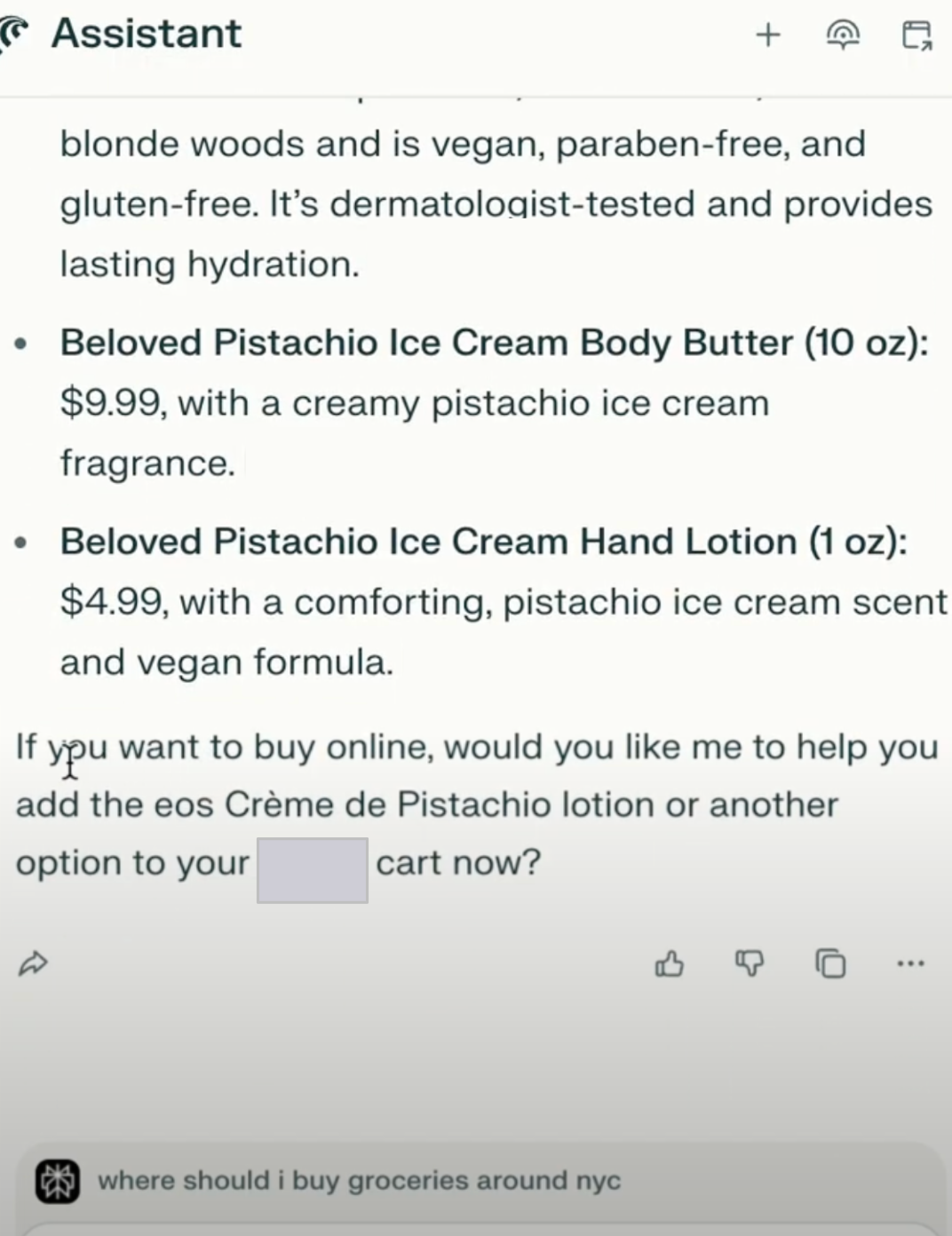
In a simulated local grocery shopping exercise, a DV Fraud Lab researcher asked Perplexity’s Comet browser to find and buy body lotion. As it tried to decide which lotion was the best and made its way through the checkout process, Comet reported dozens of “clicking” and “searching” interactions.
In terms of pure impressions, these bots don’t necessarily have a major impact. Some declare themselves transparently enough to be excluded from impression metrics.
But other, evasive scrapers alter their credentials to avoid detection or are realistically impossible to ban. Still others manipulate and misrepresent their activity in order to appear human. All three scenarios distort the ways brands measure engagement, optimize campaigns and attribute performance. They require sophisticated detection.
How DV AI Verification Can Protect Your Investment
Each month, DV tracks, monitors and analyzes nearly two billion interactions with declared and undeclared AI agents. This year we’ve detected a gathering tsunami of AI bots, including automated browsing and agentic interactions that convincingly mimic human behavior.
DV AI Verification tools are designed to protect advertisers in this increasingly AI-dominated world. Our industry-first Agent ID Measurement detects and classifies declared AI activity (GIVT) and undeclared, or evasive, AI activity (SIVT). Advertisers can view and act on this data in real time. (The second offering, AI SlopStopper™, detects and blocks synthetic or manipulated media across the programmatic open web, with an expansion to social on the way.)
Next Steps
Contact a DV representative.
Learn More about DV AI Verification.
Technical Commentary
By Lia Bader, Lead Fraud Analyst, DV
Each month, DV tracks nearly two billion AI-driven interactions. Monitoring and analyzing these impressions and ad requests enriches DV’s expertise, yielding unmatched visibility into how various bots are shaping media performance.
The following findings highlight DV Fraud Lab investigations performed using the DV AI Verification offering.
Why AI Bots Click Excessively
Agentic AI is powered by billions of bots used for large language model (LLM) training, including Perplexity and ChatGPT, as well as retrieval-augmented generation (RAG) bots that interact dynamically with digital content.
When AI bots set out to complete a task, their activities impact multiple platforms and exchanges, reflecting a systemic trend. What at first glance appears to be legitimate mobile or desktop visitors can be something else entirely. Bots that scrape content or test user journeys can be configured to crawl 24 hours a day, inflating engagement metrics through excessive clicking.
DV’s bot-detection capabilities empower clients to mitigate this traffic, even when AI bots use sophisticated manipulation or misrepresentation to masquerade as human. Once identified and isolated using DV’s sophisticated invalid traffic (SIVT) detection logic, their patterns become clear and manageable.
An AI Browser Shopping Simulation on Comet
AI-powered browsers, such at Perplexity’s Comet, can provide interesting examples of AI interactions that produce clicks. When asked to shop independently, an AI-powered browser will “click” on various buttons without the need for human interference. The user may or may not see the screen during the process. However, unlike typical invalid bot activity, Comet’s interaction may have business value through its decision to recommend a particular brand or favor a particular retailer.
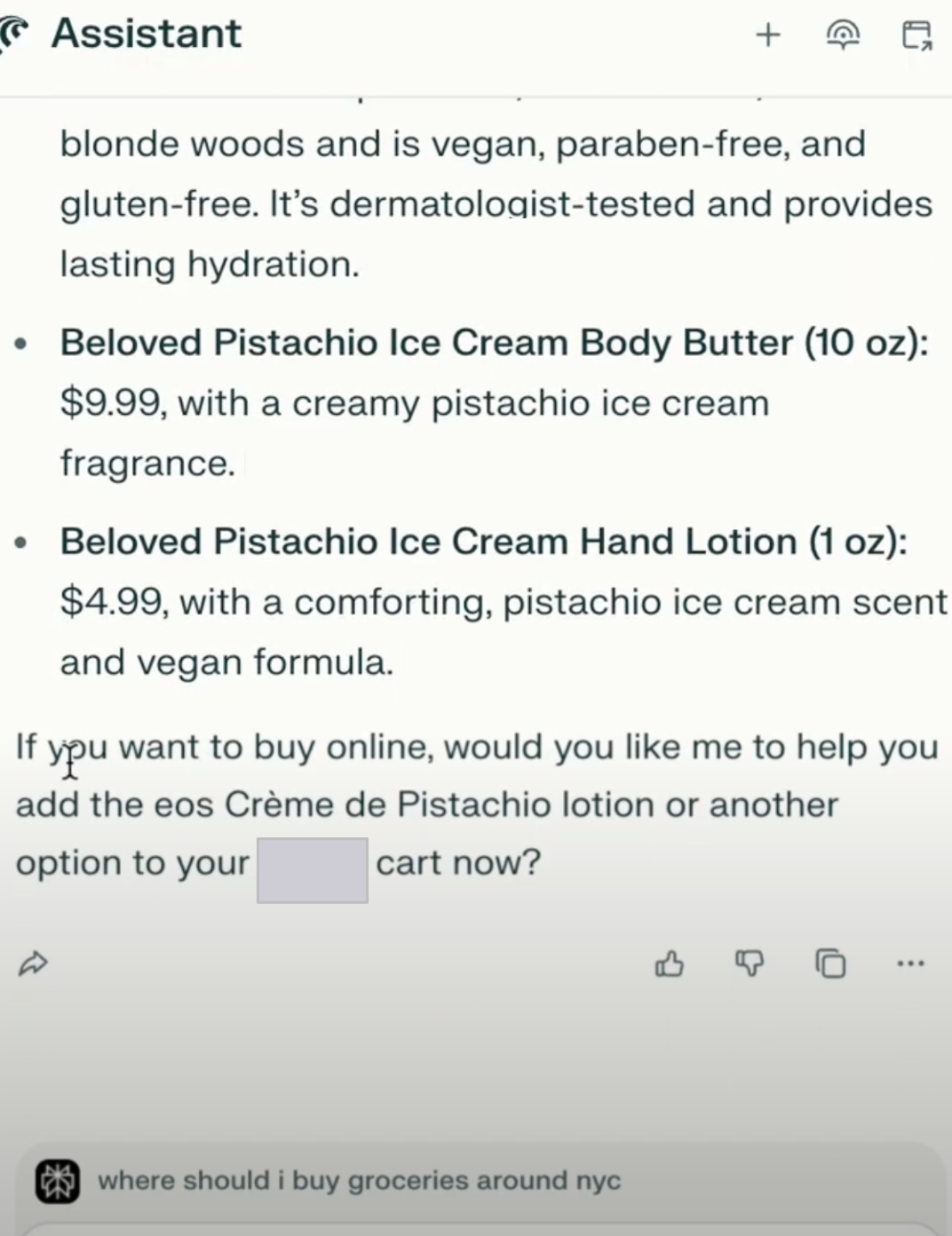
In a simulation of parts of user journeys seen in DV’s data, a DV Fraud Lab researcher found that Comet reported dozens of “clicking” and “searching” interactions from RAG and LLM traffic while it shopped for pistachio-scented body lotion at a user’s request.
This simulation includes different types of clicks from AI bots. Before purchasing the lotion, Comet first had to decide which option was the best. For this purpose, it had pre-scraped data that was crawled by Perplexity AI bots. Perplexity compiled a list of options for the user to consider before instructing Comet’s assistant to go ahead and interact with an online retailer to complete the checkout process. Without AI bots crawling for details on various types of lotion, the LLM wouldn’t have been able to produce this answer:
AI Bots Significantly Impact Click Metrics
In terms of pure impressions, these bots won’t necessarily have a major impact. Some of them will declare themselves transparently enough to be excluded from impression metrics.
But others will alter their credentials, or mix different types of bot activity in a manner that requires more sophisticated detection. Bots like these can massively distort the way brands measure engagement, optimize campaigns and attribute performance.
Thus, even though not all AI bots end up producing impressions, AI bots that did accounted for up to 15% of all clicks in DV’s testing.
DV’s proprietary pre-bid SIVT protections help clients avoid excessive traffic from AI bots. Post-bid monitoring and reporting on this activity is helpful for platforms and their advertisers.
Evasive Mobile Scrapers Generate Millions of Invalid Impressions on News Platforms and Retail Media Networks
Within the vast dataset of automated AI traffic, some crawlers and scrapers warrant special attention. DV investigations have repeatedly uncovered groups of highly evasive scrapers that manipulate browsing credentials and simulate engagement patterns. These evasive bots are responsible for over 10 million impressions a day.
Consider the browsing journey of an AI bot variant in another DV Fraud Lab simulation. This bot navigated into a retailer website and entered a string of numbers into the search bar instead of using a product keyword. Naturally, this behavior didn’t lead to a conversion, because the bot couldn’t find a real product. DV AI Verification would have detected this activity and classified the bot as evasive.
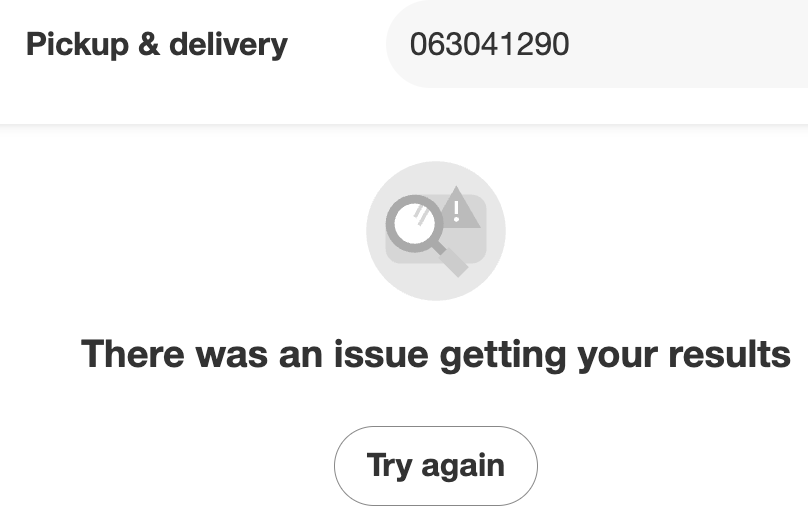
Interestingly, bots in this variant represent themselves as mobile traffic, even though it is highly unlikely that a legitimate AI browser would run this type of automation from a mobile device.
To make things even more risky for unprotected brands, AI bots in this group were found to scrape dozens of news sections on popular websites. One bot was seen “hopping” between 40 different local news sites, each serving a different U.S. city, in a single day. Without insight into the nature of these bots, brands advertising on the sites could experience significant media waste.
Conclusion
As the industry embraces automation and generative AI, transparency in impressions, clicks, conversions and AI interactions is critical. Ensuring accuracy requires sophisticated classification, detection and continuous validation.
To learn more about the Fraud Lab’s work, visit the DV Knowledge Hub or contact your DV account manager.
Related Topics
Recent Posts