Guest Essay by Luis Di Como
Luis Di Como is a global marketing and adtech adviser. As Executive Vice President, Global Media, at Unilever, he oversaw billions in media investment and led a team of 200+ experts worldwide.
There's a reason we teach children to look both ways before crossing a street: Danger doesn't announce which direction it's coming from. I often say that context is the street your ad has to cross, and a street always has two sides.
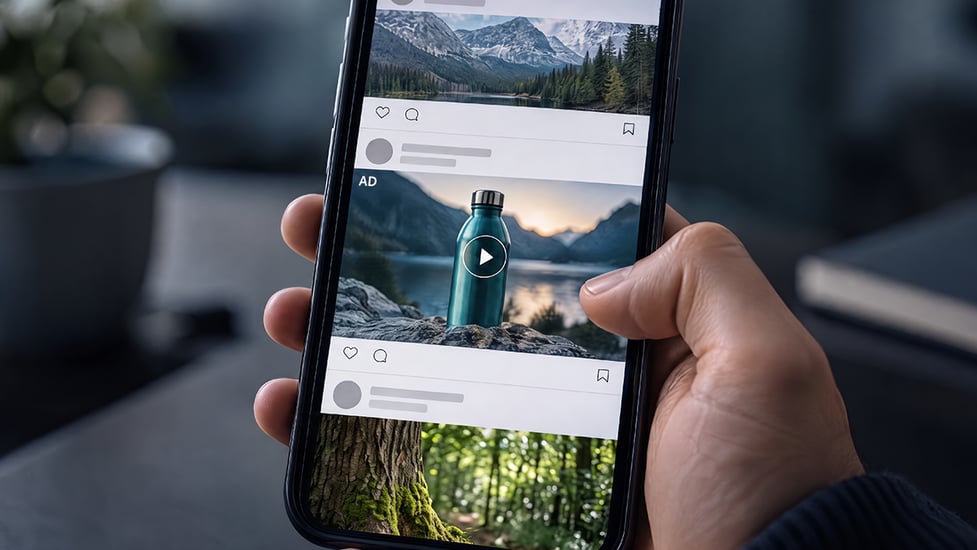
On social media, an ad crosses that street every time it appears. But looking both ways only works if you can see down the road.
An Incomplete View of Content Hazards
Many media quality measurement providers evaluate only what ran immediately before the ad. That only covers half the street. The consumer does not stop scrolling when the ad ends; they swipe again, and whatever comes next becomes part of the same experience of content and context. If that next post is the problem, a check that only looks backward has nothing to block or report.
In addition, some providers count content they cannot classify as “suitable” by default. That treats a blind corner as a clear one. But an unreviewed impression is an unknown impression, which is why a smaller coverage figure you can trust is worth much more than a larger figure that exposes you.
Meanwhile, the street is getting busier. Global social media ad spend is forecast to reach $408 billion in 2026, up 19% year over year and growing at twice the rate of other digital channels, according to EMARKETER, as cited in the 2026 DV Global Insights report Scroll, Stop and Shop: Walled Garden Trends. Consumers are ready to act, with 38% saying short-form video ads (such as those within Instagram Reels, TikTok and YouTube Shorts) can prompt them to click or purchase.
That makes the context around those ads part of a commercially valuable moment.
How Ad Context Influences Business Results
In an earlier paper on measurement, I described marketing as a chain: Advertising shapes perception, perception shapes behavior and behavior drives business growth. Context sits at the very start of that chain. It is an input that marketers can influence, and it shapes the quality of every exposure that follows.
That makes adjacency a question of performance as well as reputation, because it affects whether the money spent on an impression can do its job.
Social brand suitability research from DV shows how global consumers respond. Two in three would abandon a brand they saw next to questionable content, and 87% place the responsibility to prevent that on brands.
Training AI to Make Context Decisions
Context is an active input to performance. As media buying becomes more automated, adjacency data becomes an instruction as well as a report. Already, 32% of marketers use third-party algorithmic optimization solutions on social and walled gardens. As buying evolves toward agentic systems, the quality of those inputs becomes even more consequential. AI systems move fast and optimize toward the signals they are given. If those signals look in one direction, or count unknown content as suitable, the AI will scale the problem.
Marketers see the need. In DV’s 2026 research, 34% identified brand suitability and content alignment as a top challenge when advertising on social media. Yet only 25% reported using third-party pre-bid suitability avoidance on social and walled gardens. These findings reinforce the importance of making protection actionable before an impression is bought.
How DV Approaches Context
When evaluating media quality partners, it can help to ask these questions: Do you evaluate the content both before and after my ad? What share of my impressions was actually classified, and how is unclassified content counted? Does your technology read video, image, audio and text, or only part of that mix? Is protection applied pre-bid, before the impression is bought, or only reported after the fact?
DV’s approach to each of these concerns is to:
Look both ways. DV evaluates the content on both sides of the ad: what ran right before it and what ran right after. That matches how the consumer experiences a feed, and it is a core strength of DV’s approach.
Flag the blind spots. DV’s Universal Content Intelligence™ classifies video, image, audio and text and reports what it cannot classify as “unclassified.” As a result, DV’s measured share can be smaller than a figure that treats unclassified content as suitable. DV’s number reflects only impressions that were actually reviewed, which makes it one a brand can trust and act on.
Check before stepping off the curb. In early testing of DV’s pre-bid blocklists on Meta, unsuitable impressions dropped 53% and suitability rates rose by as much as 5%, with no loss of scale and no increase in CPMs. The blocklists removed unsuitable impressions that would otherwise have counted toward reach.
Prove it in the real world. Haleon Australia already had a strong brand suitability rate on a social video platform. Raising it further took precision, so Haleon and its agency, Publicis, piloted DV’s social pre-bid on multiple brand campaigns.
Content group-level exclusion lists raised brand suitability from 90% to 93%. Adding dynamic content-level exclusion lists, which update as content changes, raised suitability to 96% delivering a total improvement of six percentage points.
“This collaboration has supported more informed decisions and reinforced our commitment to brand suitability and consumer trust,” said Melissa George, Senior Digital Media Manager at Haleon Australia.
Haleon has since rolled the controls out to all brands in its portfolio.
Consider giving adjacency the same care and attention you give your own creative, and look both ways before your next campaign crosses the street.
Next Steps
Contact a DV representative.